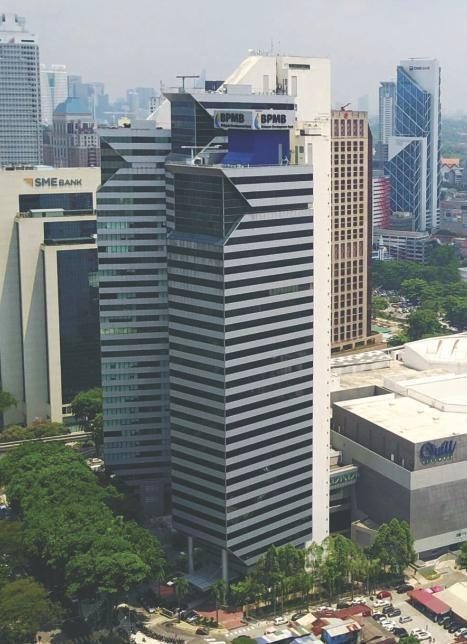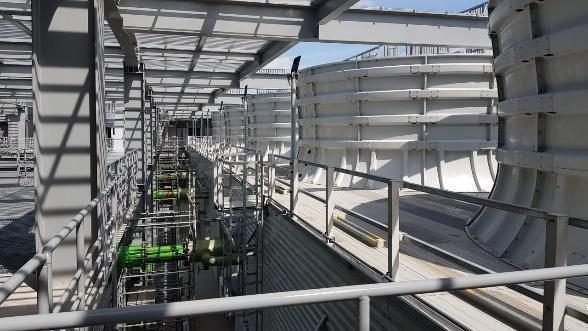
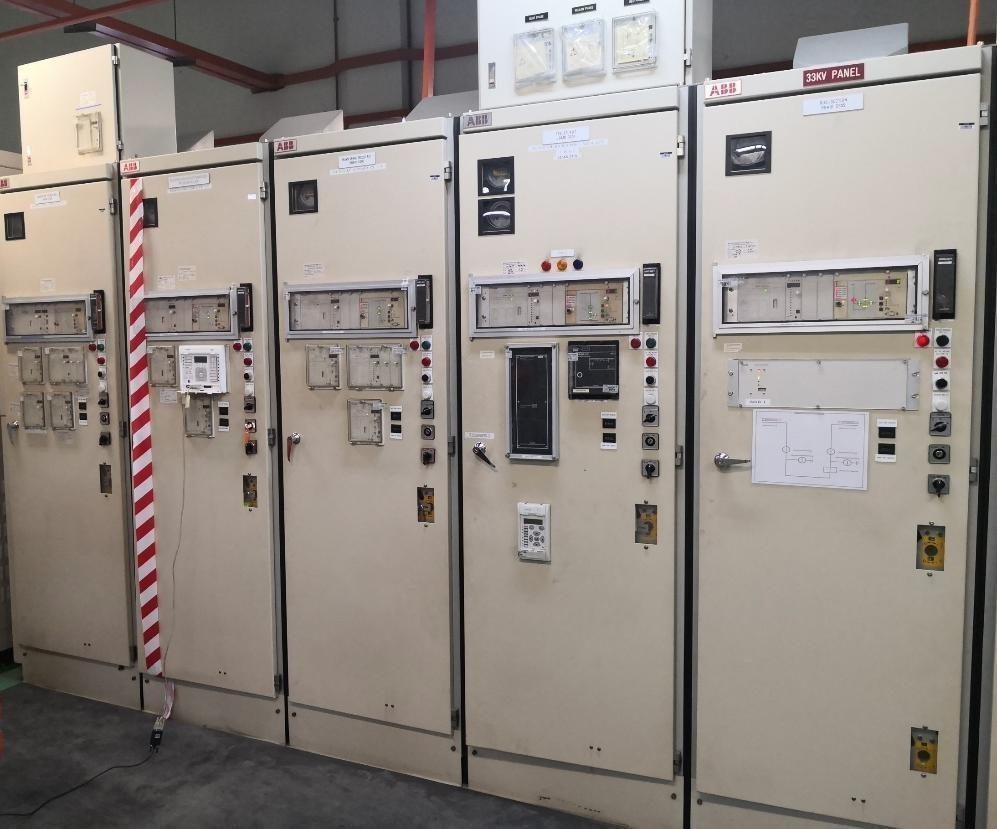
Once a development's demand passes what a low-voltage or 11 kV supply can reasonably carry — a district cooling plant, a campus, a data centre, a large mixed development — the supply arrangement changes shape. You stop being a consumer at the end of a distribution network and start being a party to a piece of network infrastructure.
The two substations
- The utility substation — TNB's PPU (Pencawang Pembahagian Utama) — is utility infrastructure. It takes supply from the transmission or sub-transmission network and is built to the utility's standards, on land the utility can access, with the utility's protection philosophy.
- The consumer substation (SSU) is where the development takes its supply and distributes it internally. From here it is your network, your protection grading and your maintenance obligation.
For the KLCC district cooling centre and the nearby development we delivered the TNB 33 kV PPU and consumer SSU on a turnkey design-and-build basis. For KLIA 1's district cooling plant we carried out new 33 kV substation works together with the 33 kV cable infrastructure. At Universiti Teknologi PETRONAS the campus takes a TNB 33 kV intake with a 33 kV consumer substation.
What consumes the programme
- 1Land and access. The utility needs a site it can reach at any hour, with defined access rights that survive the development being completed and fenced.
- 2Load forecasting. The declared maximum demand drives transformer sizing, cable sizing and the connection charge. Declaring it badly is expensive in both directions.
- 3Cable route and wayleave. The route from the intake to the development crosses land, roads and services belonging to other parties. This is routinely the longest single item.
- 4Protection coordination. Grading between the utility's protection and yours has to be agreed, not assumed, and it has to be proven at commissioning.
- 5Switchroom civils. Substation buildings have specific requirements for ventilation, fire separation, drainage, cable entry and equipment removal routes.
Above 33 kV
At transmission scale the same logic applies with far larger consequences. On the 500/275 kV Sedenak West main intake substation in Johor, the works comprised gas-insulated switchgear and 3 × 1,050 MVA of transformation. Gas-insulated switchgear is chosen where land is constrained or the environment is aggressive — it occupies a fraction of the footprint of an equivalent air-insulated switchyard, at higher capital cost and with different maintenance access requirements.
Questions worth asking early
- What is the realistic diversified maximum demand, and how confident are we in the load schedule behind it?
- Is there a firm supply requirement, and if so what redundancy does that imply in feeders and transformers?
- Where can the substation physically go, and does the utility accept the access arrangement?
- Who is responsible for the cable route, and has the wayleave process started?
- What is the standby generation and essential services strategy on the consumer side?
This note is general technical information, not project-specific engineering advice. Design decisions should be made against your own load data, site conditions and the statutory requirements applicable to your project.