Malaysia now has primary legislation on energy efficiency rather than a set of regulations sitting under the Electricity Supply Act. For anyone who owns, operates or is designing a large building or industrial installation in Peninsular Malaysia, that is a change worth understanding properly rather than second-hand.
The settled facts
| Item | Position |
|---|---|
| Legislation | Energy Efficiency and Conservation Act 2024 [Act 861] — Akta Kecekapan dan Konservasi Tenaga 2024 [Akta 861] |
| Royal assent | 14 November 2024 |
| Gazetted | 26 November 2024 |
| In force from | 1 January 2025, appointed by P.U. (B) 521/2024 |
| Geographic application | Peninsular Malaysia and the Federal Territory of Labuan |
| Replaces | The Efficient Management of Electrical Energy Regulations 2008 (EMEER 2008), repealed on commencement |
| Subsidiary regulations | Energy Efficiency and Conservation Regulations 2024 [P.U. (A) 466/2024] and the Compounding of Offences Regulations 2024 [P.U. (A) 467/2024], both published 31 December 2024 and in force 1 January 2025 |
| Regulator | Suruhanjaya Tenaga (Energy Commission) |
What this means in practice
The Act moves energy efficiency from a technical good intention to a statutory obligation with a named regulator behind it. In broad terms it establishes duties around energy management for larger energy consumers, a registration regime for the people who carry out that work, and an enforcement mechanism including compounding of offences.
We are deliberately not reproducing consumption thresholds, registration categories, audit intervals or penalty figures here. Those sit in the subsidiary regulations and in guidelines that the Energy Commission continues to issue, and a number stated on a consultant's website six months out of date is worse than no number at all. Confirm them against the current Suruhanjaya Tenaga publications, or ask us and we will check them for your specific installation.
What to establish for your own building
- 1Whether the installation falls inside the Act's scope at all — geography first, then consumption.
- 2Your actual annual energy consumption, metered rather than estimated, across every incoming supply.
- 3Whether you already hold data that would satisfy a reporting obligation, or whether the metering has to be installed first.
- 4Who inside the organisation holds the duty, and whether that person has the standing to act on it.
- 5Where the realistic savings are — because compliance and cost reduction usually point at the same equipment.
Where the engineering usually lands
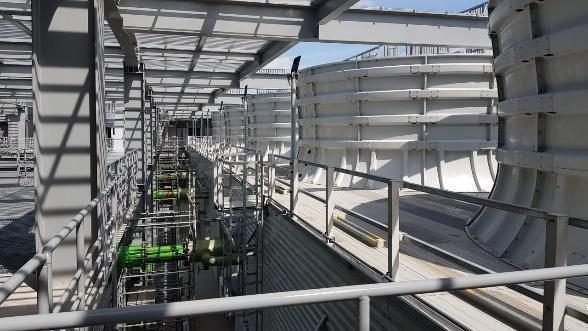
In our experience of Malaysian commercial buildings, the recurring opportunities are the same ones that show up in an energy audit anywhere in the tropics: an ageing chiller plant running well off its design efficiency, constant-speed pumps and cooling tower fans, a building automation system that was commissioned once and never revisited, and lighting that predates any sensible control strategy.
Where the capital is the obstacle rather than the engineering, an energy performance contract can fund the work against measured savings — we delivered the air-conditioning upgrade at Bangunan KWSP Peladang in Alor Setar on that basis. The prerequisite is a measurement and verification protocol agreed before the contract is signed, not improvised afterwards.
This note is general technical information, not project-specific engineering advice. Design decisions should be made against your own load data, site conditions and the statutory requirements applicable to your project.