kW/RT — kilowatts of electrical input per refrigeration ton of cooling delivered — is how chilled water plant efficiency is stated across South East Asia. Lower is better. The difficulty is that the same unit is used for two quite different measurements, and tender documents routinely fail to say which one they mean.
Chiller efficiency versus plant efficiency
Chiller-only efficiency counts the compressor power against the cooling produced. It is the number on the manufacturer's selection sheet and it is measured under standard rating conditions in a factory, not on your roof in Klang at two in the afternoon.
Plant efficiency — sometimes written kW/RT (system) — counts everything it takes to move that cooling to the building: compressors, chilled water pumps, condenser water pumps and cooling tower fans. This is the number that appears on the electricity bill.
| Contributor | Typically included in chiller kW/RT? | Included in plant kW/RT? |
|---|---|---|
| Compressor | Yes | Yes |
| Chilled water pumps (primary & secondary) | No | Yes |
| Condenser water pumps | No | Yes |
| Cooling tower fans | No | Yes |
| Controls and auxiliaries | No | Yes |
Why the gap opens up on site
- Low delta-T syndrome — the chilled water returns warmer than design, so pumps move more water for the same cooling and pumping power climbs.
- Oversizing — plant selected for a load that never arrives runs at part load, where efficiency curves fall away.
- Constant-speed auxiliaries — fixed-speed pumps and tower fans draw close to full power whatever the load.
- Fouled condensers and towers — approach temperature drifts, condensing pressure rises, and the compressor works harder for the same duty.
- Control strategy — staging and reset schedules that were never commissioned against the actual building profile.
What to specify instead
- 1State whether the required kW/RT is chiller-only or system, and at which operating condition.
- 2Define the measurement boundary explicitly: which pumps, which fans, which panels are inside it.
- 3Require permanent instrumentation — flow, temperature and power — sufficient to compute the figure in service, not just at witness testing.
- 4Set the design delta-T and make the whole chilled water side accountable for holding it.
- 5Tie acceptance to measured performance across the load range, not to a single full-load test point.
Where we have used this
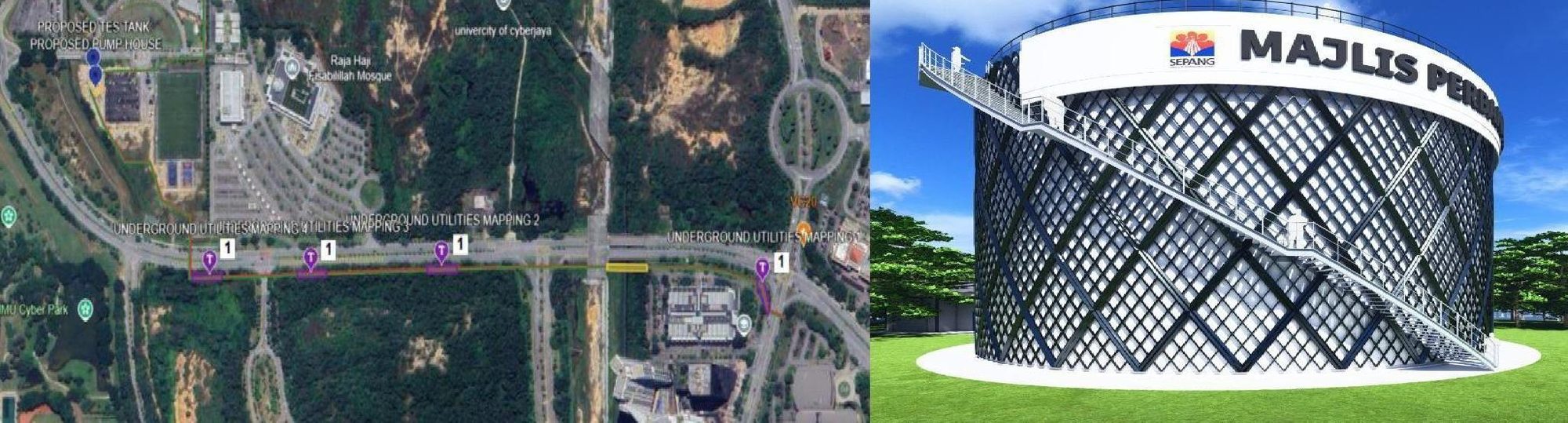
On a development in Indonesia we carried out value engineering on the chiller plant with a stated operating target below 0.65 kW/RT and a Green Mark Platinum standard to satisfy. On the KLCC district cooling plant we worked to a retrofit capacity of up to 60,000 RT with thermal ice storage — at that scale, a tenth of a kW/RT is a very large number on an annual bill.
This note is general technical information, not project-specific engineering advice. Design decisions should be made against your own load data, site conditions and the statutory requirements applicable to your project.