District cooling replaces a chiller plant in every building with one central plant serving many buildings through a chilled water pipe loop. Commercially, it converts a capital purchase into a metered utility — and like any utility, everything depends on where the meter sits and what it measures.
The three parts of the system
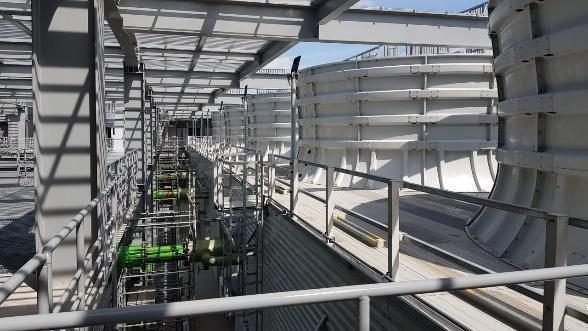
- The central plant — chillers, pumps, cooling towers and, in most schemes, thermal energy storage. Owned and operated by the district cooling provider.
- The reticulation loop — buried supply and return chilled water mains running between the plant and each connected building.
- The energy transfer station (ETS) — the interface inside each building where the district loop meets the building's own chilled water system.
What an energy transfer station does
The ETS is the contractual and hydraulic boundary. Typically it houses a plate heat exchanger separating the district loop from the building loop, a control valve regulating flow to meet building demand, isolation and strainers, and the energy billing meter. Upstream of it is the provider's responsibility; downstream is the building owner's.
How the energy is measured
A billing meter measures two things and multiplies them: the volumetric flow of chilled water through the ETS, and the temperature difference between the supply and return. Flow multiplied by delta-T gives instantaneous cooling load; integrated over time it gives cooling energy, expressed in refrigeration ton-hours (RTh).
This is why delta-T matters so much commercially and not just technically. A building that returns water too cold is drawing more flow for the same energy, loading the loop and the pumps without buying proportionally more cooling. Most district cooling tariffs therefore include a delta-T obligation on the consumer side.
Why thermal energy storage is nearly always present
Cooling demand peaks in the afternoon; electricity is cheapest at night. Thermal energy storage — either chilled water or ice — lets the plant make cooling off-peak, store it, and discharge it during the peak. That reduces installed chiller capacity, shifts consumption into cheaper tariff periods, and gives the plant a buffer against demand spikes.
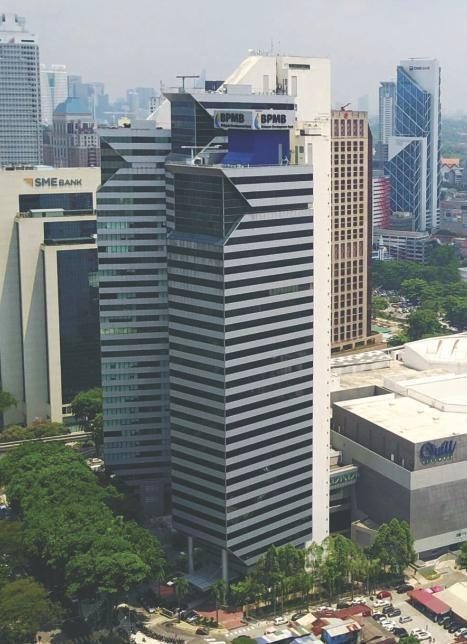
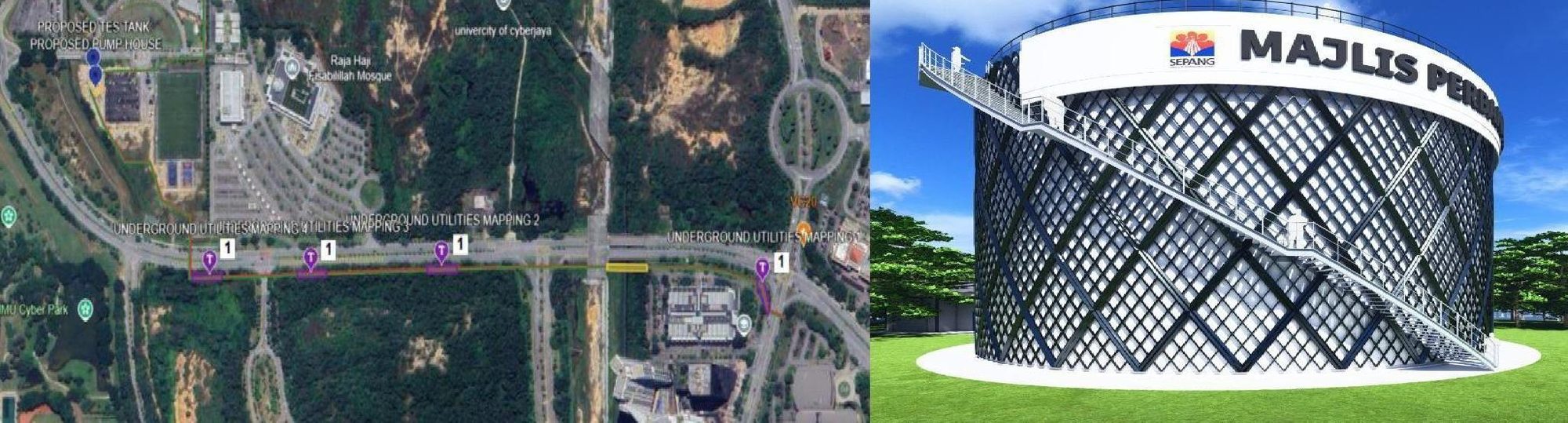
Storage is sized in ton-hours, not tons. On a chilled water supply we engineered for Majlis Perbandaran Sepang, the scheme was built around an 11,000 RTh thermal energy storage tank with an energy transfer station. On the KLCC retrofit the storage medium was ice, which stores more energy per unit volume at the cost of a lower evaporating temperature.
Questions to settle before you connect
- 1Where exactly is the metering boundary, and who owns, maintains and calibrates the meter?
- 2What is the contracted delta-T, and what happens commercially if the building fails to hold it?
- 3What is the capacity charge versus the consumption charge, and what sets the contracted capacity?
- 4What redundancy exists in the plant and the loop, and what is the availability guarantee?
- 5What happens at the ETS on a district-side outage — is there any building-side standby?
This note is general technical information, not project-specific engineering advice. Design decisions should be made against your own load data, site conditions and the statutory requirements applicable to your project.